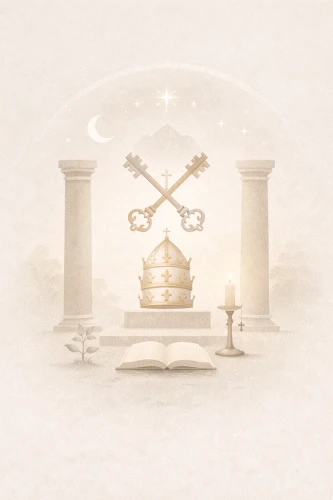
The Hierophant Tarot Meaning
Introduction
The Hierophant is a Major Arcana tarot card connected to tradition, rules, and shared belief systems. It represents learning from established sources and following structures that already exist. This card focuses on order, guidance, and accepted ways of doing things.
The Hierophant often appears when a situation is shaped by rules or expectations. These rules may come from society, family, religion, education, or workplace systems. The card points to stability that comes from structure rather than freedom or change.
In tarot, The Hierophant shows how knowledge is passed down. It reflects customs, teachings, and systems that guide behaviour over time. Its meaning depends on context, but it often highlights conformity, commitment, and respect for tradition.
The Hierophant Key Meaning
Tradition, structure, rules, shared values, belief systems, education, guidance, authority, conformity
Upright Meaning
Upright, The Hierophant represents structure, order, and guidance through established systems. It suggests following known rules or trusted advice instead of acting alone.
This card often appears when formal steps matter. These may include education, training, contracts, or approval from an authority. It can also point to learning from teachers, mentors, or institutions that hold recognised knowledge.
Emotionally, The Hierophant reflects comfort found in routine and shared values. It supports stability and predictability. It does not focus on risk or change. Instead, it supports doing things “the right way.”
Upright, The Hierophant values tradition. It suggests that answers can be found by looking at what has worked before.
Examples
- Following workplace rules to avoid conflict or confusion
- Enrolling in a recognised course or certification
- Seeking advice from an experienced teacher or mentor
Reversed Meaning
Reversed, The Hierophant often points to tension with rules or traditions. This can show up as feeling restricted, questioning authority, or rejecting expectations that feel outdated.
In some cases, the reversed card highlights systems that are too rigid. Rules may no longer serve the situation, or authority may be misused. In other cases, it shows lack of guidance, unclear leadership, or confusion caused by missing structure.
The reversed Hierophant does not always mean rebellion. It can also suggest feeling lost without rules, or struggling when structure is removed.
This position highlights imbalance. There may be too much control, or not enough direction.
Examples
- Feeling stuck in a job with strict but outdated rules
- Questioning traditions that no longer feel relevant
- Experiencing confusion due to lack of clear guidance
Love Meaning
In love readings, The Hierophant is linked to commitment, shared values, and traditional relationship structures. Upright, it often represents stable relationships built on agreement, trust, and long-term goals.
This card can point to formal commitment, such as marriage, or relationships shaped by family, culture, or social expectations. It may also reflect shared beliefs about loyalty, roles, or responsibility.
Reversed, The Hierophant can suggest conflict around values. One person may want tradition, while the other wants freedom. It can also point to pressure to conform or follow expectations that do not feel natural.
In long-term relationships, this card shows how shared beliefs support or strain the connection.
Examples
- Building a relationship around shared beliefs and routines
- Making a formal commitment together
- Reversed: disagreement about expectations or life direction
Career and Finances
In career readings, The Hierophant often represents structured workplaces and formal roles. Upright, it suggests success through following procedures, rules, and recognised systems.
This card is common in careers linked to education, government, law, healthcare, religion, or large organisations. It supports learning through training and working within clear hierarchies.
In finances, The Hierophant supports careful planning and traditional approaches. It favours saving, budgeting, and long-term security over quick gains or risky moves.
Reversed, it can point to frustration with rigid systems or lack of flexibility at work. It may also warn against ignoring rules or acting without proper guidance.
Examples
- Advancing through official promotion systems
- Working in a role with clear responsibilities
- Reversed: frustration with strict or outdated systems
Advice
As advice, The Hierophant suggests using proven methods and respecting structure. It points to learning from those with experience and following steps that are already in place.
This card advises patience and consistency. It suggests that slow, steady progress is more effective than shortcuts. When reversed, the advice may be to review rules and decide which ones still make sense.
The Hierophant reminds that structure can provide support, but only when it is balanced and fair.
Examples
- Following official procedures instead of rushing
- Seeking guidance from qualified professionals
- Reviewing rules that no longer fit the situation
Yes or No Meaning
In yes or no readings, The Hierophant often points to “Yes,” especially when the question involves commitment, education, or long-term plans.
This card supports answers that involve stability and structure. It suggests that following accepted paths will bring clarity.
When reversed, the answer may lean toward “No” or “Unclear.” This often shows conflict with rules, values, or expectations.
Examples
- “Is commitment required?” Yes
- “Will following the rules help?” Yes
- Reversed: “Is conformity the right choice?” No
Symbolism
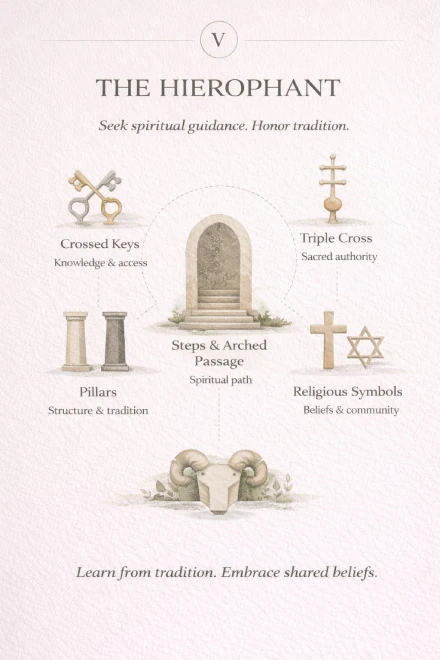
The Hierophant is usually shown seated on a throne. This symbolises authority and stability within a formal system. The throne represents order and leadership based on tradition. He often wears ceremonial clothing, showing connection to ritual and long-held beliefs. This reflects the role of teaching and preserving knowledge. Keys are sometimes shown at his feet. These represent access to understanding through accepted paths. Knowledge is not taken freely, but earned through study, trust, or initiation. The setting is structured and formal. This highlights control, order, and continuity.
Examples
- The throne: authority and structure
- Ceremonial clothing: tradition and ritual
- Keys: access to formal knowledge
The Hierophant in a Reading
When The Hierophant appears in a reading, it often highlights rules, systems, or expectations shaping the situation. It suggests that guidance can be found by looking at established methods.
This card often points to learning through structure rather than trial and error. It may also show the influence of institutions, family values, or social norms.
Timing linked to The Hierophant is usually steady and predictable. It does not suggest sudden change.
Surrounding cards help show whether structure is supportive or restrictive.
Examples
- At the start of a spread: follow guidance
- With practical cards: stability and order
- With challenging cards: conflict with authority
Frequently Asked Questions
Is The Hierophant a positive card?
Yes. It is generally positive when structure and guidance are helpful.
Does The Hierophant always mean tradition?
Often, but it can also represent shared values or formal systems.
Can The Hierophant relate to education?
Yes. It is strongly linked to teaching, learning, and training.
What does The Hierophant reversed suggest?
It may point to rigid rules, lack of guidance, or resistance to authority.
Is The Hierophant about rules or beliefs?
It represents both, especially when they guide behaviour.
Conclusion
The Hierophant tarot card represents tradition, structure, and shared values. Upright, it highlights guidance, stability, and learning through established systems. Reversed, it can point to rigid rules, lack of direction, or conflict with authority. Its meaning depends on context and surrounding cards, offering insight into how rules and belief systems influence a situation.
Explore the Major Arcana
The 22 cards of the Fool’s Journey
Explore Major Arcana Tarot Combinations →