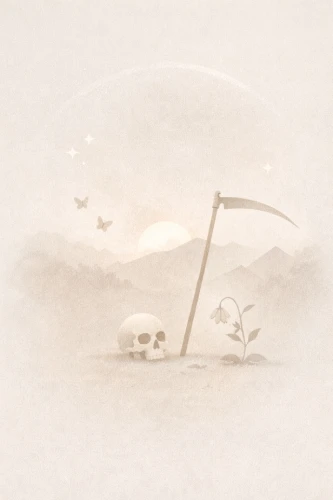
Death Tarot Meaning
Introduction
Death is a Major Arcana tarot card linked to endings, change, and transition. Despite its name, this card rarely refers to physical death in tarot readings. Instead, it represents the end of one phase and the beginning of another. It marks a clear point of closure where something can no longer continue in the same way.
The Death card often appears when a situation has reached its natural limit. Old patterns, roles, or conditions are ready to fall away. This ending may feel sudden or uncomfortable, but it creates space for something new to take shape.
In tarot, Death shows transformation through release. It focuses on change that is final and necessary. Once this card appears, returning to the old situation is no longer possible.
Death Key Meaning
Endings, transformation, change, closure, transition, release, renewal, cycles, letting go
Upright Meaning
Upright, Death represents a clear ending followed by transformation. It suggests that something has run its course and must come to an end so that change can occur.
This card often appears during major life shifts. These may include endings in relationships, jobs, habits, or beliefs. The focus is not on loss, but on the removal of what no longer fits. Once the ending happens, space is created for renewal.
Emotionally, Death upright reflects acceptance of change. Practically, it shows final decisions and clear transitions. It does not describe gradual change. It points to a clean break.
Examples
-
Leaving a job that no longer fits
-
Ending a long-standing habit or routine
-
Closing one phase of life before starting another
Reversed Meaning
Reversed, Death often points to resistance to change. An ending may be delayed or avoided, even though it is needed.
This position can show fear of letting go. Someone may hold on to a situation that has already ended in practice. It can also reflect slow or blocked transformation, where change happens but without full closure.
Reversed Death suggests that avoiding endings can prolong discomfort. Transition still needs to happen.
Examples
-
Staying in a situation that no longer works
-
Avoiding necessary change out of fear
-
Delaying closure and feeling stuck
Love Meaning
In love readings, Death is linked to major shifts in relationship dynamics. Upright, it often represents the end of a relationship or the end of a specific phase within one.
This card can point to breakups, but it can also describe deep change. A relationship may transform into something very different. Old patterns must end before a new dynamic can begin.
Reversed, Death may show difficulty letting go of past relationships or habits. Emotional closure may be delayed, even when a connection has ended.
Examples
-
Ending a relationship that no longer grows
-
Letting go of unhealthy relationship patterns
-
Reversed: holding on to a past connection
Career and Finances
In career readings, Death often represents major change or closure. Upright, it can point to leaving a job, ending a career path, or changing direction completely.
This card may appear during restructuring, layoffs, or personal decisions to move on. Financially, Death can show the end of one income source and the start of another. It also highlights the need to release outdated financial habits.
Reversed, Death may suggest resisting necessary career change. This can lead to stagnation or stress.
Examples
-
Leaving a long-term job to change careers
-
Ending an unprofitable business approach
-
Reversed: staying in work that no longer fits
Advice
As advice, Death suggests letting go of what has already ended. It encourages acceptance of closure and openness to change.
This card advises against holding on out of fear or habit. Clear endings allow healthy beginnings. When reversed, the advice may be to face what needs to end and stop delaying transition.
Death reminds that release is part of growth.
Examples
-
Accepting that a chapter has closed
-
Clearing space before starting something new
-
Reversed: addressing avoided endings
Yes or No Meaning
In yes or no readings, Death often points to “No.” It suggests that the current situation cannot continue as it is.
However, this “no” often leads to a future “yes” after change occurs. The card focuses on endings, not immediate outcomes. Reversed, the answer may be “Unclear,” due to resistance or delay.
Examples
-
“Can this continue?” No
-
“Is this ending?” Yes
-
Reversed: “Is the change complete?” Not yet
Symbolism
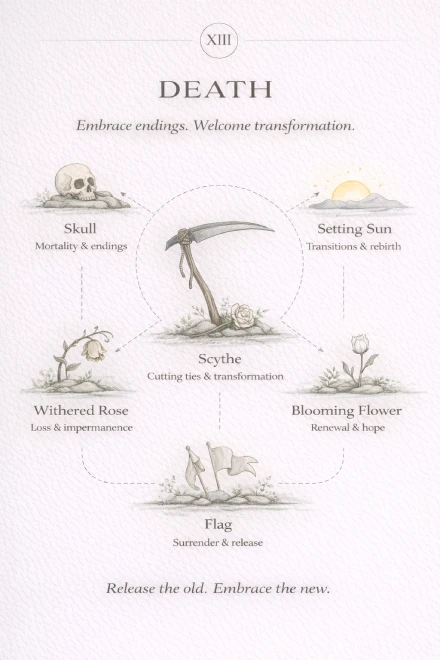
Death is often shown as a skeletal figure. This represents what remains when all surface layers are removed. It symbolises truth and inevitability.
The figure may appear on a horse, showing movement and unstoppable change. People of all ranks are often shown, symbolising that change affects everyone equally.
Rising suns or flowing water often appear in the background. These symbols point to renewal after endings.
The imagery focuses on cycles, not destruction.
Examples
-
Skeleton: removal of what is no longer alive
-
Horse: movement and transition
-
Rising sun: renewal after endings
Death in a Reading
When Death appears in a reading, it often marks a turning point. Something is ending, whether chosen or forced by circumstances.
This card shifts focus from maintaining the present to preparing for change. It highlights finality and transition. Surrounding cards help show what is ending and what may follow.
Timing linked to Death is often clear and decisive. Change may happen quickly or feel unavoidable.
Examples
-
At the start of a spread: major change ahead
-
With supportive cards: clean transition
-
With heavy cards: difficult but necessary ending
Frequently Asked Questions
Does Death mean physical death?
No. In tarot, it usually represents endings and transformation.
Is Death always negative?
No. It represents necessary change and renewal.
Can Death represent new beginnings?
Yes, but only after an ending occurs.
What does Death reversed suggest?
It often points to resistance to change or delayed endings.
Is Death about loss or release?
It is mainly about release and transition.
Conclusion
Death represents endings, transformation, and necessary change. Upright, it highlights closure and renewal through release. Reversed, it can point to resistance, delay, or fear of letting go. Its meaning depends on context and surrounding cards, showing how endings create space for new phases to begin.