Seven of Swords Tarot Meaning
Introduction
The Seven of Swords is a Minor Arcana card in the suit of Swords. The suit of Swords is connected to the element of Air. Air represents thought, communication, truth, and mental strategy. Cards in this suit often deal with conflict, decisions, and intellectual challenges.
The number seven in tarot is commonly linked to reflection, testing, and complex situations. It can represent strategy, analysis, or reassessment. In the suit of Swords, this energy often appears as mental tactics or hidden motives.
The Seven of Swords is widely associated with secrecy, deception, and strategic action. It may represent acting alone, withholding information, or attempting to gain advantage through careful planning.
The Seven of Swords Key meaning
The key meaning of the Seven of Swords is strategy and secrecy.
This card often reflects situations where honesty is unclear or actions are taken quietly. It can indicate deception, avoidance, or clever problem-solving, depending on context.
Core themes include:
- Secrecy
- Deception
- Strategy
- Acting alone
- Avoidance
Examples of this energy include:
- Withholding information during a negotiation.
- Planning an exit without informing others.
- Taking independent action to avoid conflict.
The Seven of Swords highlights situations where transparency is limited.
Upright meaning
When upright, the Seven of Swords often points to dishonesty or hidden intentions. It can indicate that someone is not fully open or that facts are being concealed.
Common upright meanings include:
- Deception or lying.
- Avoiding responsibility.
- Acting independently without consultation.
- Strategic behaviour to gain advantage.
Practical examples may include:
- A colleague taking credit for shared work.
- Someone hiding financial details in a partnership.
- Quietly planning to leave a job without notice.
In some cases, the card may represent clever strategy rather than wrongdoing. For example, preparing carefully before presenting a proposal or keeping plans private until ready.
Context determines whether the card reflects unethical behaviour or careful planning.
Reversed meaning
When reversed, the Seven of Swords may indicate exposure of secrets or a return to honesty. It can also suggest self-deception or guilt.
Possible meanings include:
- Confession or truth revealed.
- Realising past mistakes.
- Feeling guilty about dishonest behaviour.
- Abandoning secret plans.
Examples include:
- Admitting to withholding information.
- Discovering hidden facts in a business agreement.
- Deciding to approach a situation openly instead of secretly.
In some cases, the reversed card may show that avoidance is no longer effective and must be addressed directly.
Love meaning
In love readings, the Seven of Swords often relates to trust and transparency.
Upright, it may show:
- Secretive behaviour in a relationship.
- Avoiding honest communication.
- Distrust between partners.
For example:
- Hiding messages or financial details.
- Avoiding discussions about commitment.
- Withholding feelings to avoid vulnerability.
Reversed, it may suggest:
- Truth coming to light.
- Confession after secrecy.
- Choosing honesty to rebuild trust.
In new relationships, the card may warn of unclear intentions. In established partnerships, it may highlight the need for open dialogue.
Career and finances
In career readings, the Seven of Swords often represents strategy, competition, or ethical concerns.
Upright meanings include:
- Workplace politics.
- Competing through indirect tactics.
- Hiding professional plans.
Examples include:
- Quietly applying for another job.
- A colleague withholding key information.
- Negotiating carefully without revealing full intentions.
Reversed, it may indicate:
- Transparency in business dealings.
- Being exposed for unethical actions.
- Choosing cooperation over competition.
In financial matters, it may suggest reviewing agreements carefully to avoid hidden risks.
Advice
As advice, the Seven of Swords encourages careful thinking and awareness of hidden factors.
It suggests:
- Examine motives carefully.
- Avoid shortcuts that compromise integrity.
- Protect sensitive information wisely.
- Address problems directly when possible.
Practical examples include:
- Reviewing contracts before signing.
- Avoiding gossip in professional settings.
- Being clear about intentions in negotiations.
The card highlights the balance between strategic planning and ethical conduct.
Yes or No meaning
The Seven of Swords often leans toward “no” or caution.
It may indicate:
- Hidden complications.
- Lack of transparency.
- Risk of misunderstanding.
For example:
- A proposal may contain undisclosed details.
- A partnership may lack trust.
- A decision may be based on incomplete information.
If reversed, it may suggest improvement if honesty is restored.
Symbolism
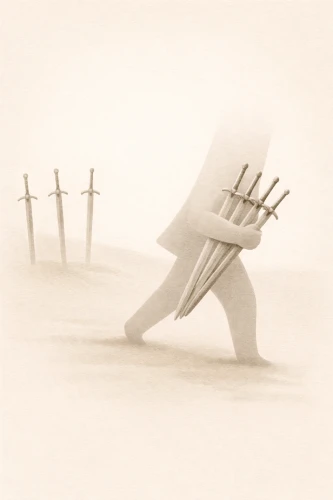
In the Rider–Waite–Smith deck, the Seven of Swords shows a figure carrying five swords while looking back. Two swords remain planted in the ground behind.
Key symbols include:
- The figure looking back: Caution or fear of being discovered.
- The stolen swords: Taking something without full permission.
- The two remaining swords: Incomplete plan or unfinished matter.
- The distant camp: Separation from others.
The number seven often represents testing or reassessment. Combined with the Air element, it reflects mental strategy and complex thought processes.
The imagery reinforces themes of secrecy and careful movement.
The Seven of Swords in a reading
In a reading, the Seven of Swords often signals hidden information or strategic behaviour. It may appear when trust is uncertain or plans are kept private.
Its meaning may shift depending on surrounding cards:
- With the Five of Swords, it may show dishonest conflict.
- With Justice, it may warn of legal consequences.
- Near the High Priestess, it may emphasise secrecy or hidden knowledge.
In daily life, it may represent:
- Quietly changing plans.
- Feeling uncertain about someone’s honesty.
- Acting independently to avoid interference.
The card highlights the importance of awareness and careful judgment.
Frequently asked questions
Is the Seven of Swords always about cheating?
No. While it often represents deception, it can also reflect strategic planning or independent action.
Does it mean someone is lying?
It may indicate dishonesty, but context is important. It can also suggest withholding information rather than direct lying.
Is it a negative card?
It is often challenging, especially in matters of trust. However, it can also highlight clever thinking when used ethically.
Can it show self-deception?
Yes. It may reflect avoiding truth or ignoring personal responsibility.
Does it always involve another person?
Not always. It can represent internal avoidance or personal strategy.
Conclusion
The Seven of Swords represents secrecy, strategy, and hidden motives. As part of the suit of Swords, it focuses on thought, communication, and mental tactics. The number seven reflects testing and complex situations.
Upright, it often signals deception or cautious strategy. Reversed, it may show exposure of truth or return to honesty. In love, career, and daily life, it highlights issues of trust and transparency.
Overall, the Seven of Swords symbolises the need for awareness and careful judgment in situations where information may not be fully clear.