The Emperor Tarot Meaning
Introduction
The Emperor is a Major Arcana tarot card linked to structure, authority, and stability. It represents order, boundaries, and the systems that hold things together. This card focuses on leadership, responsibility, and the ability to create and maintain control in practical ways.
The Emperor often appears when clear rules, plans, or decisions are required. It reflects situations where strength comes from organisation, consistency, and firm direction rather than flexibility or emotion.
In tarot, The Emperor highlights how structure is built and enforced. Its meaning depends on context, position, and surrounding cards, especially in areas related to work, leadership, and long-term security.
The Emperor Key Meaning
Authority, structure, stability, leadership, control, discipline, responsibility, order, boundaries
Upright Meaning
Upright, The Emperor represents stability created through structure and clear authority. It suggests a situation where rules, systems, or leadership provide security and direction.
On a practical level, this card often appears when organisation, planning, or firm decision-making is needed. Emotionally, it reflects self-control and reliability rather than emotional expression. Internally, it points to confidence built on discipline and experience.
The Emperor upright values order and predictability. Progress comes from planning and consistency, not improvisation.
Examples
-
Establishing clear rules or routines to improve stability
-
Taking responsibility for leading a group or project
-
Creating systems that support long-term goals
Reversed Meaning
Reversed, The Emperor can indicate issues with control or authority. This may show up as rigidity, misuse of power, or resistance to structure.
In some cases, it points to weak leadership, lack of boundaries, or avoidance of responsibility. In others, it reflects dominance, inflexibility, or power struggles.
Rather than removing structure, the reversed Emperor highlights imbalance in how control or authority is applied.
Examples
-
Struggling with unclear leadership or changing rules
-
Experiencing conflict due to rigid or controlling behaviour
-
Avoiding responsibility, leading to instability
Love Meaning
In love readings, The Emperor is linked to stability, protection, and clear roles. Upright, it often represents dependable relationships built on trust, structure, and commitment.
This card can indicate traditional relationship dynamics or a focus on long-term security. Reversed, it may suggest control issues, emotional distance, or lack of balance between authority and care.
In established relationships, The Emperor highlights how power and responsibility are shared.
Examples
-
Building a relationship with clear expectations and boundaries
-
Prioritising long-term security over short-term emotion
-
Reversed: imbalance caused by control or lack of flexibility
Career and Finances
In career readings, The Emperor strongly relates to leadership, management, and structured environments. Upright, it suggests authority, clear direction, and responsibility for outcomes.
Financially, it points to discipline, budgeting, and long-term planning. This card supports stability through control and careful management. Reversed, it can warn against poor leadership, financial rigidity, or misuse of authority.
The Emperor favours planning, rules, and accountability.
Examples
-
Managing a team or department with clear structure
-
Creating and following a strict financial plan
-
Reversed: financial strain caused by poor leadership decisions
Advice
As advice, The Emperor suggests establishing order and taking responsibility. It encourages setting boundaries, creating structure, and following clear plans.
This card advises firmness and consistency. When reversed, it may suggest reviewing where control is too strict or too loose.
Examples
-
Setting clear limits and expectations
-
Taking charge of a disorganised situation
-
Adjusting rigid rules that no longer work
Yes or No Meaning
In yes or no readings, The Emperor often points to “Yes,” especially for questions related to stability, leadership, or long-term plans.
When reversed, the answer may lean toward “No” or “Unclear,” suggesting weak structure or authority issues.
Examples
-
“Is this stable?” Yes
-
“Will discipline help here?” Yes
-
Reversed: “Is control working?” No
Symbolism
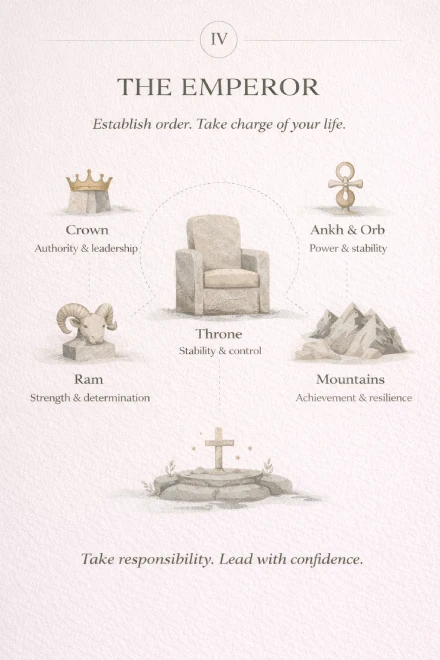
The Emperor is usually shown seated on a solid throne, symbolising authority and stability. The throne often appears heavy and structured, reflecting firm foundations and control.
Armour beneath clothing suggests protection and preparedness. The setting is often barren or rocky, showing strength built through endurance rather than comfort.
The imagery focuses on order, strength, and responsibility.
Examples
-
The throne: authority and structure
-
Armour: protection and readiness
-
Harsh landscape: strength through discipline
The Emperor in a Reading
When The Emperor appears in a reading, it often highlights the need for structure or leadership. It points to situations where rules, planning, or authority play a key role.
Timing connected to this card is usually steady and controlled. Surrounding cards show whether structure is supportive or restrictive.
Examples
-
At the start of a spread: establish order first
-
With practical cards: strong leadership and planning
-
With emotional cards: tension between control and feeling
Frequently Asked Questions
Is The Emperor a positive card?
Yes. It is generally positive and linked to stability and leadership.
Does The Emperor represent authority figures?
Often. It can point to managers, leaders, or institutions.
Is The Emperor about control?
Yes, but healthy control based on structure and responsibility.
What does The Emperor reversed suggest?
It may indicate misuse of power, rigidity, or lack of leadership.
Is The Emperor linked to long-term plans?
Yes. It strongly supports structure and long-term stability.
Conclusion
The Emperor tarot card represents structure, authority, and stability. Upright, it highlights leadership, discipline, and clear boundaries. Reversed, it can point to imbalance in control, weak structure, or misuse of power. Its meaning is shaped by context and surrounding cards, offering insight into how order and responsibility are applied.