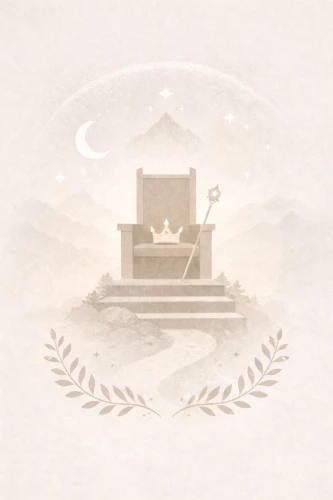
The Emperor is card four of the Major Arcana and carries the energy of authority, structure, order, and discipline. He represents the impulse to build lasting things, to establish clear rules, and to lead with consistency and purpose. Where The Empress is organic and receptive, The Emperor is deliberate and organised. He is associated with Aries and Mars: direct, assertive, and concerned with how power is structured and applied. In combinations, he tends to add weight, seriousness, and a sense of consequence to whatever he appears alongside.
The question The Emperor raises in a combination is rarely about what is possible. It is more often about who is in charge, what the rules are, and whether the structure being applied is genuinely serving the situation or quietly working against it. Nearby cards reveal whether his authority is well-placed, misapplied, or in tension with something that cannot be controlled.
How The Emperor Changes in Tarot Combinations
The Emperor is one of the more directive presences in combination. He tends to organise and formalise the energy of surrounding cards, adding a quality of structure, responsibility, and external authority that shifts how those cards read. A card that might otherwise describe an open or fluid situation becomes more defined, structured, and consequential beside The Emperor.
With creative or emotional cards, he creates productive tension. Cups cards alongside The Emperor can suggest that feelings are being managed or suppressed rather than expressed, or that a relationship is being shaped by rules and expectations rather than genuine connection. Wands cards paired with him often describe ambition being channelled through clear strategy and disciplined effort rather than raw enthusiasm alone.
With cards of movement and momentum, The Emperor provides direction. The Chariot alongside him creates a highly focused combination of will and structure. The Eight of Wands loses some of its scattered speed and becomes more purposefully aimed. These combinations suit someone who knows exactly where they are going and has the authority and discipline to get there.
With cards of uncertainty or instability, The Emperor creates friction. The Moon’s ambiguity is poorly suited to his preference for clear order. The Seven of Cups’ scattered possibilities frustrate his need for a defined direction. In these combinations, the reading often points to a clash between the desire for control and a situation that cannot be neatly organised.
With cards of challenge or collapse, The Emperor’s shadow becomes relevant. The Tower alongside him raises the question of rigid structures giving way. The Devil can point to authority becoming domination. The Five of Swords or the Ten of Swords in combination with him can describe a situation where force or control has produced a damaging outcome.
It is also worth noting that The Emperor often represents a specific person in a reading: a father, a manager, an institution, or any figure whose authority shapes the situation. Nearby cards frequently describe the nature of that authority and its effect on the querent.
The Emperor with Major Arcana Cards
When The Emperor appears alongside other Major Arcana cards, the combination tends to address significant themes of power, structure, leadership, and the relationship between individual will and larger forces.
Some Major Arcana cards align comfortably with The Emperor. The Chariot shares his directed, purposeful energy. Justice sits naturally beside him, linking authority with accountability and fair consequence. The Hierophant doubles the sense of established order and institutional weight. These combinations tend to describe situations where structure and authority are clearly in play and functioning in a defined direction.
Others create notable tension. The Empress asks whether his order is warm enough to support rather than restrict. The High Priestess brings inner knowing into conflict with external rule. The Hermit turns away from authority toward private wisdom. The Hanged Man refuses to be directed. These pairings point to moments where the impulse to control or organise is meeting something it cannot fully govern.
The Tower alongside The Emperor is one of the more significant combinations in the deck: rigid or overly controlled structures suddenly giving way. The Devil can turn his authority dark, pointing toward domination, coercion, or the abuse of power.
The Emperor with Minor Arcana Cards
Minor Arcana cards alongside The Emperor describe the specific area where his energy of structure, discipline, and authority is being expressed or tested.
Wands alongside The Emperor often describe ambition being pursued with discipline and strategic direction. The creative fire of Wands is focused and organised rather than scattered. These combinations suit professional leadership, entrepreneurial drive with a clear plan, or creative work being executed with real structural rigour.
Cups create the most friction with The Emperor. Emotional life does not respond well to being controlled or scheduled, and these combinations often point to feelings being managed rather than felt, or to a relationship where authority and affection are in conflict. The positive reading is someone applying emotional maturity and steadiness to a relational situation.
Swords pair naturally with The Emperor’s analytical and decisive side. These combinations tend to describe clear thinking, strategic communication, and the willingness to make difficult decisions with authority. When difficult Swords cards appear, they can point to harsh judgement, cold reasoning, or conflict arising from the exercise of power.
Pentacles sit comfortably alongside The Emperor. Both are concerned with building things that last. These combinations often describe sound financial management, disciplined professional effort, or the kind of long-term thinking that produces durable results. The shadow here is excessive control over resources or a reluctance to share what has been accumulated.
Aces alongside The Emperor give new beginnings a structured, purposeful foundation. Fives introduce conflict into his ordered domain. Tens can describe either the completion of something built with discipline or the exhaustion of carrying too much authority for too long.
Key The Emperor Tarot Combinations
The Emperor + The Empress
Already covered from The Empress’s perspective, this pairing reads differently from The Emperor’s side. Where The Empress describes what is being nurtured and grown, The Emperor asks what structure and boundaries are needed for that growth to be sustainable. The combination at its best describes a balance between warmth and order, creativity and discipline, organic development and clear form.
The tension worth watching is when The Emperor’s structure becomes restrictive. The Empress’s energy needs room to breathe and develop at its own pace. If The Emperor’s authority is too rigid or too prescriptive, it can stifle rather than support. The surrounding cards usually indicate whether the balance is working or whether one energy is dominating the other.
The Emperor + The High Priestess
This pairing sets up a clear and often productive tension between two different kinds of knowing. The Emperor understands through analysis, structure, and established rules. The High Priestess understands through intuition, patience, and what lies beneath the surface. Neither approach is superior, but they pull in opposite directions, and the combination usually asks which kind of understanding the situation actually requires.
In practical terms, this pairing often appears when someone is applying a logical or rule-based framework to a situation that is more complex or more human than that framework can accommodate. It can also describe a relationship or dynamic where external authority and inner knowing are in genuine dialogue rather than conflict, each informing the other.
The Emperor + The Tower
Few combinations in the Major Arcana are as direct about the consequences of rigidity. The Tower represents sudden collapse: what has been built on faulty or unstable foundations gives way without warning. Next to The Emperor, the question is whether the structures he represents, whether personal, professional, or relational, have been built with genuine soundness or with the kind of overconfident certainty that leaves no room for flexibility.
This combination can also describe an external authority or institution being suddenly disrupted. A system the querent has relied on or operated within is no longer stable. The Emperor’s order is being broken open, and what comes next will require something different from the rigid control that characterised what came before.
The Emperor + The Devil
The Emperor’s authority, turned toward domination rather than leadership, produces something close to The Devil’s energy of binding and control. Together these two cards often point to a situation where power is being used to restrict, coerce, or manipulate rather than to build and protect. This can describe an external authority figure whose control has become excessive or harmful, or a more internal dynamic where the querent’s own need for control is limiting their freedom and relationships.
The combination is worth reading carefully rather than reacting to. Not every appearance of these two cards together signals a genuinely abusive situation. Sometimes it simply points to overly rigid self-discipline, a tendency to over-manage a situation, or a relationship dynamic where authority has drifted toward possessiveness. The surrounding cards usually clarify the degree and direction of the issue.
The Emperor + Strength
These two cards both represent power, but they express it in very different ways. The Emperor’s power is external, structural, and exercised through authority and clear direction. Strength’s power is internal, patient, and expressed through composure and quiet persistence. In combination, they often describe a situation where both qualities are needed, or where one is present without the other.
When The Emperor dominates the pairing, the reading may point to someone who is strong in authority but lacking the inner composure that would make their leadership genuinely effective. When Strength dominates, the question is whether inner steadiness alone is enough or whether some external structure and clear decision-making are also required. At their best together, these cards describe real and integrated authority: confident, grounded, and capable of both directing and holding.
Quick The Emperor Tarot Combination Meanings
| Combination | Meaning |
|---|---|
| The Emperor + The Fool | A new beginning that needs clearer structure and boundaries to develop properly, or an authority figure cautioning against a reckless leap. |
| The Emperor + The Magician | Skill and authority working in the same direction; capable, strategic leadership with clear purpose. |
| The Emperor + The High Priestess | External authority in tension with inner knowing; logic and intuition pulling the situation in different directions. |
| The Emperor + The Empress | Structure and creative warmth needing to work together; the balance between order and nurturing is what matters here. |
| The Emperor + The Hierophant | Double establishment energy; strong institutional, traditional, or conventional authority shaping the situation. |
| The Emperor + The Lovers | A significant choice constrained by duty, expectation, or external authority; responsibility shaping what is possible. |
| The Emperor + The Chariot | Highly directed authority driving toward a clear goal; powerful and focused leadership with real momentum. |
| The Emperor + Strength | External authority meeting inner composure; genuine leadership draws on both, not just one. |
| The Emperor + The Hermit | Authority stepping back from leadership to seek private wisdom; a tension between directing others and understanding oneself. |
| The Emperor + Wheel of Fortune | Established order meeting unpredictable change; structure being tested by circumstances outside anyone’s control. |
| The Emperor + Justice | Authority aligned with genuine accountability; fair and consequential outcomes within a clear framework of rules. |
| The Emperor + The Hanged Man | Structure in suspension; the need to pause and reconsider challenges the impulse to push forward and control. |
| The Emperor + Death | Established authority or structure undergoing significant transformation; the end of one system making way for another. |
| The Emperor + Temperance | Order achieved through measured, patient effort; discipline balanced by a willingness to adapt. |
| The Emperor + The Devil | Authority tipping toward domination; control becoming coercive or self-serving rather than protective. |
| The Emperor + The Tower | Rigid structures giving way suddenly; overconfident order meeting the consequences of its own inflexibility. |
| The Emperor + The Star | Structure creating the conditions for genuine and hopeful renewal; order serving something meaningful. |
| The Emperor + The Moon | Authority undermined by confusion or unconscious forces; control meeting a situation it cannot fully see or govern. |
| The Emperor + The Sun | Clear, confident leadership producing genuinely positive outcomes; strong authority working in everyone’s interest. |
| The Emperor + Judgement | A calling to step into a new and more significant level of authority or responsibility. |
| The Emperor + The World | Authority and structure reaching a point of completion; disciplined effort coming into full expression. |
| The Emperor + Ace of Wands | Structured direction given to a new creative or ambitious venture; raw potential being channelled with purpose. |
| The Emperor + Two of Wands | Strategic planning from a position of authority; confident, forward-looking direction with a clear goal in sight. |
| The Emperor + Three of Wands | Structured ambition paying off; disciplined leadership that has already established its forward momentum. |
| The Emperor + Four of Wands | Stable, ordered community or celebration; structure creating a genuine and lasting foundation for belonging. |
| The Emperor + Five of Wands | Authority dealing with internal conflict or competition; structure being tested by friction from multiple directions. |
| The Emperor + Six of Wands | Leadership producing deserved recognition; authority validated by clear and visible success. |
| The Emperor + Seven of Wands | Defending a position with authority and firm conviction; standing ground against opposition through structured confidence. |
| The Emperor + Eight of Wands | Fast-moving events being directed and organised; speed given clear purpose and structure. |
| The Emperor + Nine of Wands | Disciplined endurance under sustained pressure; holding ground through structured persistence and experience. |
| The Emperor + Ten of Wands | Carrying too much authority or responsibility for too long; the weight of over-control becoming unsustainable. |
| The Emperor + Page of Wands | A young or developing ambition that benefits from clearer direction and practical structure. |
| The Emperor + Knight of Wands | Passionate drive being brought into focus by clear authority; enthusiasm meeting discipline. |
| The Emperor + Queen of Wands | Confident, socially intelligent leadership working alongside structured authority; warmth and order in productive balance. |
| The Emperor + King of Wands | Two strong leadership energies; bold vision combined with disciplined authority makes for a powerful combination. |
| The Emperor + Ace of Cups | A new emotional beginning being approached with more control or structure than it may actually need. |
| The Emperor + Two of Cups | A relationship being shaped by clear expectations or roles; connection within a defined structure. |
| The Emperor + Three of Cups | Community or social connection being led or organised; celebration within a clearly ordered social context. |
| The Emperor + Four of Cups | Emotional withdrawal from a situation where authority or expectation has made genuine feeling difficult. |
| The Emperor + Five of Cups | Loss within a structured or authoritative context; grief that feels formal or suppressed rather than freely expressed. |
| The Emperor + Six of Cups | Returning to familiar emotional territory shaped by authority figures from the past, particularly a father or mentor. |
| The Emperor + Seven of Cups | An attempt to impose structure on a situation that is genuinely unclear; authority frustrated by scattered possibilities. |
| The Emperor + Eight of Cups | Walking away from a situation where authority or structure has made emotional fulfilment impossible. |
| The Emperor + Nine of Cups | Satisfaction achieved through disciplined effort and clear direction; contentment that has been earned rather than found. |
| The Emperor + Ten of Cups | Emotional or family harmony supported by clear roles, structure, and shared expectations. |
| The Emperor + Page of Cups | Developing emotional sensitivity meeting the expectations of an authority figure; feeling constrained by external rules. |
| The Emperor + Knight of Cups | Romantic or creative feeling being channelled through a more structured or goal-directed approach. |
| The Emperor + Queen of Cups | Emotional intelligence and structured authority finding a working balance; care operating within a clear framework. |
| The Emperor + King of Cups | Emotional maturity and external authority working in genuine alignment; mature, steady leadership with real inner depth. |
| The Emperor + Ace of Swords | Clear, decisive thinking applied with authority; a moment of sharp mental focus that produces direct and consequential action. |
| The Emperor + Two of Swords | A decision being avoided despite having the authority and information to make it; stalemate within a structured context. |
| The Emperor + Three of Swords | Pain caused or shaped by authority; heartbreak within a context of rules, institutions, or controlling relationships. |
| The Emperor + Four of Swords | Structured rest and strategic withdrawal; deliberate recovery with a clear return to action in mind. |
| The Emperor + Five of Swords | Authority used to win at someone else’s expense; a power dynamic producing a damaging or hollow outcome. |
| The Emperor + Six of Swords | A managed and deliberate departure from a difficult situation; transition handled with calm authority. |
| The Emperor + Seven of Swords | Authority being circumvented or undermined; someone working around rather than within the established structure. |
| The Emperor + Eight of Swords | Feeling trapped by rules, institutions, or authority figures; restriction that is partly external and partly accepted. |
| The Emperor + Nine of Swords | Anxiety produced by or directed toward authority, rules, or the consequences of decisions made within a structured context. |
| The Emperor + Ten of Swords | A decisive and painful ending within an authoritative or institutional context; something built on control reaching collapse. |
| The Emperor + Page of Swords | Sharp intellectual curiosity operating within or in reaction to a structured, rule-governed environment. |
| The Emperor + Knight of Swords | Decisive, fast-moving action backed by authority; directness that may be too blunt for the situation. |
| The Emperor + Queen of Swords | Clear, direct authority combined with precise communication; structured leadership with no patience for ambiguity. |
| The Emperor + King of Swords | Two strong authoritative energies; strategic, analytical mastery combined with clear and consequential decision-making. |
| The Emperor + Ace of Pentacles | A new material or professional opportunity being approached with discipline and clear strategic intent. |
| The Emperor + Two of Pentacles | Balancing multiple practical responsibilities under pressure; managing competing demands with structured discipline. |
| The Emperor + Three of Pentacles | Professional expertise operating within a clear organisational structure; skilled work shaped by defined roles and expectations. |
| The Emperor + Four of Pentacles | Holding tightly to resources, position, or control; security management tipping toward excessive grip. |
| The Emperor + Five of Pentacles | Material hardship linked to rigid or inflexible systems; difficulty persisting because the structure around it is too fixed to adapt. |
| The Emperor + Six of Pentacles | Resources or authority being distributed fairly within a clear hierarchy; giving from a position of stable power. |
| The Emperor + Seven of Pentacles | Disciplined, patient investment in something being carefully built; structured effort producing slow but solid results. |
| The Emperor + Eight of Pentacles | Methodical, disciplined skill development within a professional or institutional context; mastery through structured practice. |
| The Emperor + Nine of Pentacles | Material independence achieved through disciplined effort and clear self-direction; self-sufficiency built on solid foundations. |
| The Emperor + Ten of Pentacles | Material legacy and family stability built through consistent authority and disciplined long-term management. |
| The Emperor + Page of Pentacles | A new practical learner operating within or benefiting from a structured mentorship or institutional framework. |
| The Emperor + Knight of Pentacles | Steady, disciplined progress within a clear structure; reliable professional effort that follows established methods. |
| The Emperor + Queen of Pentacles | Practical, grounded authority balanced with genuine care; structured management that does not lose sight of the human dimension. |
| The Emperor + King of Pentacles | Established material and professional authority; disciplined leadership producing lasting, substantial results. |
Tips for Reading The Emperor in Combinations
- The Emperor often represents a specific person. Before interpreting him as an abstract energy, consider whether he might point to a father, manager, institution, or authority figure whose influence is shaping the situation. Nearby cards usually clarify the nature and effect of that presence.
- Watch for the balance between structure and rigidity. The Emperor’s order is productive when it serves the situation. When it becomes inflexible or excessive, surrounding cards will often signal the problem: The Tower, The Devil, difficult Cups pairings, or cards showing restriction.
- Cups cards alongside The Emperor deserve careful attention. This is where the tension between control and emotional life is most visible. These combinations often describe feelings being managed, suppressed, or shaped by external expectation rather than freely expressed.
- In professional or practical contexts, The Emperor is often a strengthening presence. Pentacles and deliberate Wands pairings alongside him tend to describe disciplined effort, sound management, and durable results. These are among his more straightforward combinations.
- If you read reversals, look for where authority has broken down or become harmful. The Emperor reversed often points to an abdication of responsibility, excessive or abusive control, or a situation where the structures that should provide stability have become the source of the problem.
Conclusion
The Emperor is a card that rarely leaves a combination unchanged. He adds weight, consequence, and a quality of structured authority to whatever he appears alongside, and his presence almost always raises the question of how power is being used and whether the order it produces is genuinely serving everyone involved. At his best, he describes leadership that is fair, durable, and purposeful. At his most difficult, he describes control that has become its own kind of trap.
The quick-reference table covers all his pairings, but the most useful thing to bring to any Emperor combination is the question of balance: between structure and flexibility, between authority and care, between what has been built and what still needs room to grow.