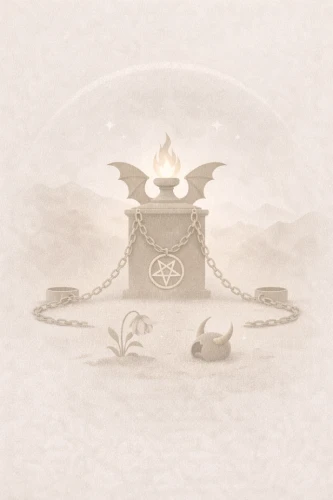
The Devil is card fifteen of the Major Arcana. It deals with situations where desire, fear, habit, power, or material pressure has narrowed someone’s freedom to act. Sometimes the person is actively taking part in keeping things as they are. Sometimes they’re being controlled, coerced, financially trapped, manipulated, or simply worn down by someone or something with more leverage than they have. And sometimes the attachment itself is genuinely pleasurable, intense, or comforting, which is exactly what makes leaving harder than staying.
What sits beside The Devil shows the specific shape the bind takes: money, obsession, overwork, coercion, shame, secrecy, manipulation, dependency, compulsive pleasure, fear, or a habit that’s simply hard to stop because it’s become familiar. It also tends to show who’s actually benefiting from things staying the way they are, which isn’t always the person the card is about.
How The Devil Changes in Tarot Combinations
Beside cards of movement and freedom, like The Fool, The Chariot, or the Eight of Cups, The Devil can mean several different things depending on the rest of the spread. It can describe someone leaving a situation while carrying the same appetite, debt, or attachment straight into the next one. It can mean an escape plan that’s genuinely restricted by money or by another person’s conditions. It can be impulsive flight that looks like change but isn’t, because nothing about the underlying pattern has actually shifted. Sometimes it’s someone moving physically away from a place while staying emotionally tied to whatever they left. Sometimes ambition itself has turned compulsive, and someone keeps pushing forward specifically because stopping would mean having to feel something they’re avoiding.
Beside endings and transformation cards, like Death, The Tower, or Judgement, don’t assume this automatically means a clean, clarifying breaking point. It can describe withdrawal from an addiction, a controlling relationship actually ending, or a job or arrangement collapsing because the exploitation running underneath it finally became unsustainable. It can also mean a sudden loss of access to something someone had been compulsively relying on, one unhealthy dynamic ending while the underlying pattern that produced it stays fully intact, or a forced ending that leaves someone disoriented rather than free. Sometimes real consequences land before any actual insight has developed, which means the ending doesn’t automatically come with understanding attached.
Beside reflective cards, the differences matter. The High Priestess points to secrecy: unspoken motives, private knowledge, or manipulation happening quietly enough that nobody else has noticed. The Hermit can mean withdrawal and isolation, someone actually researching what’s going on, or isolation itself becoming part of the problem rather than the solution to it. The Hanged Man points to passivity, dependency, waiting for someone else to make the first move, learned helplessness, or giving up far more than was actually necessary. The Devil itself is none of these. It’s the pressure, appetite, fear, leverage, or habit that’s keeping the whole thing running in the first place.
The Devil with Major Arcana Cards
The Emperor alongside The Devil often points to authoritarian control: coercive leadership, a rigid hierarchy that punishes dissent, financial or institutional power being used against someone, or authority that’s been outright abused. The Hierophant can describe shame created by doctrine, an oppressive tradition, institutional pressure to conform, or staying inside a belief system specifically because leaving would threaten belonging, status, or identity.
The Lovers next to The Devil usually means desire tangled up with dependency: unequal choice, a coercive attachment, fear of being alone driving someone to stay, or a relationship that’s intense without being safe. Wheel of Fortune alongside it often points to repeating cycles, unstable luck feeding an addictive pattern, or circumstances changing on the surface while the underlying habit stays exactly the same underneath.
Justice beside The Devil frequently means legal consequences, a contract that genuinely restricts someone’s freedom, debt, formal accountability, or a coercive arrangement finally being examined by someone outside it. The Moon next to it points to denial, secrecy, paranoia, a hidden addiction, mistaking manipulation for intuition, or genuinely not knowing who can be trusted. The World alongside The Devil can describe a whole lifestyle, family pattern, or identity built around something that now feels complete and normal, even though it’s genuinely difficult to leave.
The Devil with Minor Arcana Cards
Wands combinations tend to involve compulsive work, ambition that’s become tangled up with self-worth, burnout, an obsession with recognition, sexual intensity, competitiveness that’s turned corrosive, or anger that’s become its own kind of addictive relief. They can also describe an inability to stop a project even once it’s clearly run its course, leadership that’s slid into control, or creative drive that’s stopped feeling like a choice and started feeling like an obligation.
Cups combinations move into emotional territory: dependency, jealousy, obsession, trauma bonding, escapism, or pleasure that’s become addictive rather than enjoyable. Depending on context, this can include drinking or other forms of emotional numbing. They can describe staying for affection, for fantasy, or purely out of fear of being alone, mistaking intensity for real intimacy, or one person using care and attention as a way of controlling another.
Swords combinations tend to involve obsessive thinking, shame, rationalisation, manipulation, threats, blackmail, or intrusive thoughts that won’t quiet down. They can describe arguments that repeat without ever resolving, self-justification that’s become automatic, mental habits that keep someone passive when they’d rather act, or using logic to defend behaviour that’s clearly causing harm.
Pentacles combinations are the most material: debt, financial dependency, exploitative employment, staying somewhere purely for housing or security, control exercised through money, hoarding, status anxiety, overwork, golden handcuffs, an unequal financial arrangement between two people, or a lifestyle that’s genuinely difficult to either sustain or walk away from.
Court Cards
Court cards next to The Devil vary considerably depending on the surrounding spread. A card here can point to a charismatic person with a controlling streak, someone financially dependent on another person, a caregiver whose help arrives with strings attached, or a leader who exploits other people’s loyalty. It can describe someone hiding a dependency behind visible competence, a messenger bringing a tempting offer that has conditions attached, or a person whose intensity is genuinely attractive but genuinely hard to be around. It can also point to someone enforcing the rules of an unhealthy system on other people’s behalf, or someone who is themselves trapped by the very role or position they hold.
Key The Devil Tarot Combinations
The Devil + The Lovers
This pairing can describe several distinct dynamics, and it’s worth being specific rather than vague about which one applies. Mutual desire complicated by jealousy or control. One person holding more power in the relationship than the other. Someone staying because being alone feels worse than staying does. A bond held together by sex, attraction, money, housing, status, or emotional dependence, sometimes several of these at once. A relationship that is, at the same time, genuinely loving and genuinely unhealthy, which is a harder thing to sit with than a simply bad relationship would be.
It can also describe a choice that feels voluntary on the surface but is actually shaped by fear or outside pressure, or wanting someone or something in a way that conflicts directly with what the person actually values. None of these possibilities cancel each other out, and more than one is often true at the same time.
The Devil + The Tower
A controlling arrangement collapsing, addiction or excess finally causing a visible crisis, or an abusive system being exposed to people outside it. This pairing can describe sudden withdrawal from something someone had come to depend on, real financial or emotional fallout, or destructive behaviour reaching a consequence that can no longer be hidden or minimised.
It doesn’t automatically mean the disruption was for the best. Sometimes the structure collapses while the compulsion underneath it stays completely intact, which means the crisis has happened without the underlying problem actually being solved. What’s collapsing and what’s left standing afterward are two separate questions, and the rest of the spread usually has to answer both.
The Devil + The Hermit
Solitude here can be doing very different work depending on what’s around it. It can describe someone isolating specifically to hide a habit from other people. It can describe withdrawing out of shame rather than out of any deliberate plan. It can genuinely mean becoming aware of a pattern precisely because there’s finally enough quiet to notice it. It can also describe obsessive self-analysis that circles the same ground without producing any actual change, or loneliness itself feeding the very dependency someone’s trying to manage.
There’s a specific version worth naming directly: someone who believes they’re “working on themselves” through solitude while that solitude is functioning as a way to avoid the harder, more exposed work of actually changing anything. The same pairing can also describe someone deliberately stepping away from a temptation on purpose, which is a genuinely different and more constructive thing. Both readings are plausible, and they look similar from a distance.
The Devil + Death
This pairing doesn’t promise a clean release, and it’s worth resisting the urge to read it that way by default. It can describe a compulsive pattern actually ending, or a real withdrawal from something harmful. It can also describe losing access to something familiar, even harmful, before the emotional attachment to it has caught up. A controlling relationship can end here while the attachment to the person stays fully in place. Sometimes the ending is imposed from outside rather than chosen. Sometimes a destructive pattern doesn’t end at all, just changes shape, and one source of control gets quietly replaced by another.
This combination can mark real release. It can just as easily mark loss, craving, grief, or a period of real instability. Which one applies depends entirely on what else is present in the reading.
The Devil + The Star
Hope here does different work in different situations, and it’s worth being specific about which kind is present. This pairing can describe genuine recovery taking hold after addiction or after leaving a controlling situation. It can also describe believing someone will change with no actual evidence that they will. Hope can become the specific reason someone stays in a difficult situation rather than the thing that helps them leave it.
Optimism can be a real support through withdrawal or through rebuilding a life. It can also be a public face that hides a private struggle nobody else is seeing. Faith is only as useful here as the behaviour actually backing it up. Without that, this pairing can describe someone idealising a future that keeps not arriving, while the pattern underneath continues exactly as it was.
Quick The Devil Tarot Combination Meanings
| Combination | Meaning |
|---|---|
| The Devil + The Fool | Running toward a fresh start while carrying the same appetite, debt, or attachment into it. |
| The Devil + The Magician | Using charm, skill, or influence to manipulate an outcome. |
| The Devil + The High Priestess | A secret attachment, hidden motive, or private behaviour nobody’s naming out loud. |
| The Devil + The Empress | Care that’s turned possessive, smothering, or conditional. |
| The Devil + The Emperor | Authority maintained through fear, money, rules, or outright control. |
| The Devil + The Hierophant | Staying inside a belief system because leaving would threaten belonging, status, or identity. |
| The Devil + The Lovers | Desire and dependency tangled together tightly enough that they’re hard to pull apart. |
| The Devil + The Chariot | Drive that’s stopped being a choice and started being compulsive. |
| The Devil + Strength | Using enormous self-control to manage an urge or habit that keeps coming back. |
| The Devil + The Hermit | Isolation feeding the pattern, or solitude finally making it impossible to keep ignoring. |
| The Devil + Wheel of Fortune | An addictive cycle repeating even as the circumstances around it keep shifting. |
| The Devil + Justice | A contract, debt, or unequal agreement that’s become impossible to avoid dealing with. |
| The Devil + The Hanged Man | Remaining stuck because too much agency has already been handed over to the situation. |
| The Devil + Death | Losing access to something harmful before the attachment to it has actually gone. |
| The Devil + Temperance | Harm reduction or controlled use that may not stay controlled for long. |
| The Devil + The Tower | A destructive pattern reaching a crisis that’s finally impossible to hide. |
| The Devil + The Star | Hope helping someone recover, or becoming the reason they stay longer than they should. |
| The Devil + The Moon | Secrecy, denial, or manipulation making the whole situation hard to read accurately. |
| The Devil + The Sun | Something hidden coming into the open, whether or not that exposure actually feels like relief. |
| The Devil + Judgement | Being confronted with a pattern that’s gone unexamined for a long time. |
| The Devil + The World | A whole lifestyle or identity built around a pattern that now just feels normal. |
| The Devil + Ace of Wands | A powerful new attraction, ambition, or obsession taking hold fast. |
| The Devil + Two of Wands | A plan being shaped more by fear or compulsion than by an actual decision. |
| The Devil + Three of Wands | Ambition expanding in a direction driven by self-worth rather than genuine interest. |
| The Devil + Four of Wands | A celebration or milestone that comes with strings, expectations, or obligations attached. |
| The Devil + Five of Wands | Conflict kept alive because someone is actually getting something out of the fight. |
| The Devil + Six of Wands | Recognition becoming addictive, with self-worth tied to staying visible. |
| The Devil + Seven of Wands | Defending a position that’s costing more than it’s actually worth. |
| The Devil + Eight of Wands | Momentum that feels unstoppable mainly because stopping feels unthinkable. |
| The Devil + Nine of Wands | Refusing to put something down, even though it’s clearly costing too much to keep carrying. |
| The Devil + Ten of Wands | Carrying an impossible load because stopping would threaten identity, income, or control. |
| The Devil + Page of Wands | Enthusiasm that’s already tipping into something harder to walk back from. |
| The Devil + Knight of Wands | Chasing something with an intensity that’s stopped feeling like a choice. |
| The Devil + Queen of Wands | Confidence being used to draw people in and keep them close on someone else’s terms. |
| The Devil + King of Wands | Vision and authority combined in a way that leaves little room to say no. |
| The Devil + Ace of Cups | Infatuation arriving fast enough to feel overwhelming rather than choosing it. |
| The Devil + Two of Cups | Mutual feeling complicated by jealousy, dependency, or unequal power between two people. |
| The Devil + Three of Cups | Pleasure or group belonging making excess harder to notice or question. |
| The Devil + Four of Cups | Numbing out rather than dealing with what’s actually being felt. |
| The Devil + Five of Cups | Grief that’s being used to justify staying somewhere unhealthy. |
| The Devil + Six of Cups | Returning to a familiar person or pattern because familiarity feels safer than change. |
| The Devil + Seven of Cups | Fantasy standing in for a decision that hasn’t actually been made. |
| The Devil + Eight of Cups | Wanting to leave, and finding that the pull of what’s familiar makes it genuinely hard to. |
| The Devil + Nine of Cups | Pleasure crossing over into overuse, indulgence, or reliance. |
| The Devil + Ten of Cups | A family picture that looks complete but is held together by unspoken obligation. |
| The Devil + Page of Cups | An emotional openness that’s being taken advantage of by someone else. |
| The Devil + Knight of Cups | A romantic pursuit driven by longing rather than by anything mutual. |
| The Devil + Queen of Cups | Deep feeling being used, knowingly or not, to hold onto someone. |
| The Devil + King of Cups | Emotional control being used to influence, contain, or manage other people. |
| The Devil + Ace of Swords | A fact or admission cutting straight through denial. |
| The Devil + Two of Swords | Refusing to decide because either choice would expose what the situation has actually become. |
| The Devil + Three of Swords | Pain that’s being minimised because admitting its size feels too costly. |
| The Devil + Four of Swords | Rest being used to avoid a decision rather than to actually recover. |
| The Devil + Five of Swords | A conflict where control matters more to someone than the relationship does. |
| The Devil + Six of Swords | Beginning to move away from a difficult situation, though not entirely free of it yet. |
| The Devil + Seven of Swords | Manipulation, secrecy, or self-deception helping the pattern keep going. |
| The Devil + Eight of Swords | Feeling trapped by fear, conditioning, or genuinely limited options, not just by one visible barrier. |
| The Devil + Nine of Swords | Guilt or dread that’s tied to something the person hasn’t fully faced yet. |
| The Devil + Ten of Swords | A painful ending to a situation that had clearly become untenable. |
| The Devil + Page of Swords | Starting to notice a pattern that’s been quietly repeating for a while. |
| The Devil + Knight of Swords | Acting fast on impulse rather than on anything actually thought through. |
| The Devil + Queen of Swords | Cutting through rationalisation to say plainly what’s actually going on. |
| The Devil + King of Swords | Logic being used to justify control, punishment, or behaviour that mainly benefits the person in charge. |
| The Devil + Ace of Pentacles | A financial offer or opportunity that arrives with strings attached. |
| The Devil + Two of Pentacles | Juggling finances in a way that’s creating dependency or debt rather than solving anything. |
| The Devil + Three of Pentacles | A working relationship where one person holds most of the leverage. |
| The Devil + Four of Pentacles | Money, property, or security being used as leverage over someone. |
| The Devil + Five of Pentacles | Financial hardship that’s keeping someone in a situation they’d otherwise leave. |
| The Devil + Six of Pentacles | Help that comes with obligation, dependence, or an uneven balance of power attached. |
| The Devil + Seven of Pentacles | Staying invested in something mainly because walking away now feels like too great a loss. |
| The Devil + Eight of Pentacles | Work becoming compulsive, identity-consuming, or genuinely impossible to switch off from. |
| The Devil + Nine of Pentacles | Independence that’s actually more fragile or conditional than it appears from outside. |
| The Devil + Ten of Pentacles | A family or financial structure held together by obligation, inheritance, or fear of losing security. |
| The Devil + Page of Pentacles | A practical opportunity worth checking closely for hidden conditions. |
| The Devil + Knight of Pentacles | Steady, dutiful effort that’s become an obligation rather than a genuine choice. |
| The Devil + Queen of Pentacles | Practical care that’s shifted into control over how someone else lives. |
| The Devil + King of Pentacles | Financial authority being used to keep another person dependent. |
Tips for Reading The Devil in Combinations
- Identify what the person actually wants, or is afraid of losing. That’s usually more useful than a general sense that something’s wrong.
- Ask who benefits from the arrangement staying as it is. It isn’t always the person the reading is about.
- Tell habit apart from coercion. These can look identical in a spread and mean completely different things about how much choice is actually available.
- Check whether material limits are making it genuinely hard to leave. Money, housing, and dependents are real constraints, not excuses.
- Look for what’s actually rewarding about the pattern. Pleasure, relief, status, safety, or belonging are often what keeps something going, and naming the specific reward is more useful than calling it “unhealthy” in general.
- Avoid blaming someone for adapting in order to survive a situation they didn’t create. Not every trapped person built the trap themselves.
- Positive cards nearby can mean real recovery, or they can mean denial. The two can look very similar from a few cards away.
- Court cards can represent the person exerting control, the person being controlled, or both at once. Don’t assume the querent is automatically one or the other.
- If you read reversals, look for partial withdrawal, relapse, denial, or a pattern that’s become less visible without actually disappearing. Reversed doesn’t automatically mean resolved.
Conclusion
The Devil shows up wherever freedom has been narrowed by desire, fear, power, money, habit, or someone else’s control. What matters most in the reading is what’s actually keeping the arrangement rewarding, or difficult, to leave; who holds the leverage in the situation; and whether the person involved has enough real freedom and support to change it if they want to. Those three questions do more work than any general sense that something is wrong.