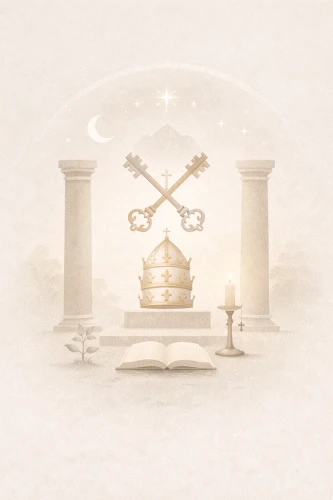
The Hierophant is card five of the Major Arcana and carries the energy of tradition, teaching, and the beliefs a community passes down and holds to be true. He represents what a culture agrees on and hands along through ceremony, education, and shared practice. Where The Emperor organises through authority and rules, The Hierophant organises through shared values and collective meaning. He is associated with Taurus: fixed, stable, and committed to what has proven its worth over time.
In combinations, The Hierophant tends to ask whether a situation is being approached along a well-worn path or against it. He brings a sense of convention and shared expectation to whatever he appears alongside. The question he raises is rarely about what’s possible in the abstract. It’s more often about what’s expected, what’s been taught, and whether that inherited approach is actually serving the situation or just limiting it.
How The Hierophant Changes in Tarot Combinations
The Hierophant is one of the more context-dependent cards in combination. His meaning shifts considerably depending on whether the surrounding cards suggest he’s offering useful guidance, providing helpful community and structure, or representing the kind of rigid conformity that gets in the way of real growth.
With cards of rebellion or independence, he creates clear tension. The Fool‘s spontaneity bumps against his preference for doing things the accepted way. The Tower‘s disruption threatens the systems he represents. The Knight of Wands has little patience for doing things by the book. In these combinations, the reading often addresses the pull between individual freedom and what a group or tradition expects.
With cards of learning and guidance, he adds weight to the theme of knowledge passed down. The Hermit alongside The Hierophant brings a person’s own spiritual search into contact with what a community teaches. The High Priestess creates a pairing of two different kinds of authority: one outward and taught, one inward and felt. These combinations often point to questions about where wisdom actually comes from and whose guidance can be trusted.
With relationship cards, The Hierophant frequently points to formal commitment. In a reading about love or partnership, his presence often signals marriage, counselling, or a relationship shaped by clear social expectations. This isn’t necessarily limiting. Sometimes that kind of structure is exactly what a relationship needs.
With career and practical cards, he often points to formal education, professional training, recognised qualifications, or mentorship within an established field. Pentacles cards alongside him frequently describe someone working within a structured professional system, whether pursuing a qualification, following established practice, or learning from someone more experienced.
The shadow side is worth naming clearly. Tradition carries real value, and this isn’t a negative card by default. But the same systems that pass down useful knowledge can also enforce conformity, discourage independent thought, or protect their own interests at the expense of the people they’re supposed to serve. Surrounding cards usually make clear which version of The Hierophant is relevant.
The Hierophant with Major Arcana Cards
When The Hierophant appears alongside other Major Arcana cards, the combination tends to address belief, authority, belonging, and the pull between individual understanding and shared tradition.
Some Major Arcana cards reinforce his energy. The Emperor doubles down on order and authority. Justice links institutions to formal accountability and the rule of law. The World alongside The Hierophant suggests a conventional path has reached a satisfying end.
Others create more friction. The Fool’s openness sits awkwardly in his more structured world. The High Priestess brings personal spiritual knowing up against institutional teaching. The Lovers raises questions about whether a significant choice is coming from someone’s actual values or from the weight of what’s expected of them. The Hermit turns away from community and tradition toward private inner seeking.
When The Hierophant appears with The Tower, the combination addresses collapse head-on: the systems and beliefs that were meant to provide stability aren’t holding anymore. The Devil alongside him can point to tradition being used to control people rather than actually guide them.
The Hierophant with Minor Arcana Cards
Minor Arcana cards alongside The Hierophant describe the specific area where tradition, formal learning, or social expectation is most active.
Pentacles sit most naturally with The Hierophant in professional and educational contexts. These combinations often describe formal training, recognised qualifications, apprenticeship in an established field, or the kind of financial and professional know-how passed down through mentorship and steady practice. The process here is rarely fast, but it tends to hold up.
Cups alongside The Hierophant frequently point to formal relationships and the emotional side of tradition. Marriage, religious ceremony, couples counselling, and the social expectations that shape how love and family are expressed all show up in these pairings. The shadow side is when emotional life gets pushed into a shape that fits what’s expected rather than what’s actually felt.
Swords give The Hierophant a more intellectual edge. These combinations can describe formal writing or speech, legal and official matters, academic study, or the intellectual tradition behind a field. When difficult Swords cards appear, they can point to dogmatic thinking, rigidity, or institutional authority being used to shut down honest questions.
Wands create the most friction with The Hierophant. Creative energy and personal ambition don’t always sit well within established systems. These combinations often describe tension between individual drive and the conventions of an institution or tradition, or, more productively, formal education and mentorship in a creative field.
Aces alongside The Hierophant bring new beginnings into a traditional context, a new chapter starting within an existing framework. Fives introduce conflict or disruption into his ordered world. Tens describe conventional paths reaching completion, for better or worse.
Key The Hierophant Tarot Combinations
The Hierophant + The Fool
This is one of the clearest tension pairings The Hierophant appears in. The Fool wants to leap forward without a map; The Hierophant asks why the well-worn route is being ignored. The Fool values freshness and open possibility; The Hierophant values what’s already proven itself. Together they set up a combination that’s really about whether following an existing path or striking out alone is the right call here.
Neither card is wrong on principle. Sometimes The Fool’s instinct to break from convention is exactly right, and The Hierophant’s caution is just the weight of outdated expectation. Other times, The Hierophant’s guidance is worth listening to, and The Fool’s urge to skip past it is more impatience than insight. The surrounding cards and the question asked usually clarify which is happening.
The Hierophant + The High Priestess
Two different kinds of authority in the same combination. The Hierophant’s knowledge is shared, passed down, and formalised through group practice and teaching. The High Priestess’s knowledge is personal, intuitive, and reached through stillness rather than ceremony. Together they raise a real question: whose guidance is more trustworthy here, the established tradition or the inner sense of things?
In practice, this pairing often shows up when someone is working out the relationship between an organised belief system and their own private understanding. It can also appear in non-spiritual contexts, wherever received expertise and personal instinct are pulling in different directions. The combination rarely says one side is simply right. It more often points to the need for both to be in honest conversation with each other.
The Hierophant + The Lovers
The Lovers is about a significant choice, and The Hierophant’s presence adds a layer of expectation to that choice. This combination often appears in readings about marriage, formal partnership, or relationship decisions carrying the weight of family or social expectation. The question it raises is whether the choice being made actually belongs to the querent, or is shaped by what they feel they’re supposed to do.
This isn’t necessarily a negative pairing. Formal commitment within a shared value system can mean a great deal, and The Hierophant isn’t simply warning that convention is a trap. But the combination does ask for honesty about whose values are actually driving the decision. If the choice lines up with what the querent believes, his presence is affirming. If it doesn’t, the combination is asking a harder question.
The Hierophant + The Tower
When his structured world and The Tower appear together, the reading is addressing a real disruption to established order. Something relied on, whether a belief system, an institution, a formal relationship, or a professional setup, is no longer stable. The Hierophant’s world, built on continuity and shared practice, is being broken open.
This combination can feel alarming in context, but it’s worth reading with some care. Not every disruption to a tradition is a disaster. Some institutions have outlived their usefulness, and The Tower’s collapse occasionally clears the way for something more supportive and less rigidly controlled to take its place. The surrounding cards usually indicate whether the disruption is a loss, a relief, or both at once.
The Hierophant + The Devil
This is The Hierophant’s most difficult combination. Where he’s usually the card of knowledge passed down through generations, alongside The Devil he can represent tradition used to control people: belief systems that enforce conformity through shame or fear, institutions that protect their own standing at the expense of the people they’re meant to serve, or social expectations that bind rather than guide.
The combination asks directly whether the tradition or system being engaged with is actually serving the querent’s wellbeing. This isn’t a call to throw out all inherited wisdom. But it’s a clear signal that something about the current relationship with an institution, belief system, or set of expectations deserves an honest look. The line between structure that supports and structure that controls is what this pairing is really about.
Quick The Hierophant Tarot Combination Meanings
| Combination | Meaning |
|---|---|
| The Hierophant + The Fool | Tradition and spontaneity pulling against each other; the choice between a well-worn path and an uncharted one. |
| The Hierophant + The Magician | Skill being certified or developed within a professional or educational setting. |
| The Hierophant + The High Priestess | Institutional teaching meeting personal inner knowing; a question about whose guidance is more trustworthy here. |
| The Hierophant + The Empress | Creative or nurturing work shaped by traditional expectations; growth happening within conventional social lines. |
| The Hierophant + The Emperor | Authority and tradition doubled up; a strongly institutional context shaping the situation. |
| The Hierophant + The Lovers | A significant relationship or choice carrying the weight of social, family, or institutional expectation. |
| The Hierophant + The Chariot | Disciplined forward movement along a well-established route; ambition following a proven path. |
| The Hierophant + Strength | Inner composure operating within, or pushing against, what’s expected; patience within a structured setting. |
| The Hierophant + The Hermit | Personal spiritual seeking turning away from shared tradition toward private understanding. |
| The Hierophant + Wheel of Fortune | Established practices or cycles turning; conventional patterns being disrupted or renewed by outside change. |
| The Hierophant + Justice | Formal law, institutional process, or official accountability shaping the outcome. |
| The Hierophant + The Hanged Man | Convention put on pause; seeing a tradition or belief from an entirely new angle before deciding how to relate to it. |
| The Hierophant + Death | A significant shift within or away from tradition; the end of an established way of doing things. |
| The Hierophant + Temperance | Balanced, moderate practice within a spiritual or traditional setting; steady, measured devotion. |
| The Hierophant + The Devil | Tradition or institutional authority being used to control rather than actually guide. |
| The Hierophant + The Tower | Belief systems or institutions collapsing suddenly; a structure that can no longer hold. |
| The Hierophant + The Star | Hope and renewal found within a tradition; a conventional path leading somewhere worthwhile. |
| The Hierophant + The Moon | Confusion or unclear motives within a formal setting; things may not be as official or reliable as they appear. |
| The Hierophant + The Sun | Success through conventional means; a traditional path producing good, well-supported outcomes. |
| The Hierophant + Judgement | A calling that challenges or outgrows the tradition the querent has been operating within. |
| The Hierophant + The World | A conventional or formal path reaching a satisfying end; the system producing lasting results. |
| The Hierophant + Ace of Wands | Creative inspiration being brought into a formal or educational setting; a new start within an existing structure. |
| The Hierophant + Two of Wands | Planning an ambitious direction within institutional or conventional boundaries. |
| The Hierophant + Three of Wands | Moving forward along a professionally recognised path with growing confidence. |
| The Hierophant + Four of Wands | Celebration or belonging within a community defined by shared tradition or ceremony. |
| The Hierophant + Five of Wands | Creative energy or ambition running into institutional convention; friction between individual drive and the rules. |
| The Hierophant + Six of Wands | Recognition achieved through conventional means; success validated within a professional or social structure. |
| The Hierophant + Seven of Wands | Defending a traditional position under pressure from those who want to challenge or change it. |
| The Hierophant + Eight of Wands | Official communication, formal announcements, or fast-moving developments within an institution. |
| The Hierophant + Nine of Wands | Sticking with a structured commitment despite weariness; staying the course. |
| The Hierophant + Ten of Wands | The weight of conventional obligation or institutional responsibility becoming too much. |
| The Hierophant + Page of Wands | Young creative energy running into the expectations of a traditional or institutional environment. |
| The Hierophant + Knight of Wands | Personal ambition and enthusiasm moving faster than the existing system can comfortably accommodate. |
| The Hierophant + Queen of Wands | Confident leadership working within conventional expectations, with warmth and some social savvy. |
| The Hierophant + King of Wands | Bold, visionary leadership operating within, or reshaping, the norms of an established field. |
| The Hierophant + Ace of Cups | A new emotional or relational beginning taking shape within a formal context; possibly marriage or ceremony. |
| The Hierophant + Two of Cups | A formal, socially recognised partnership; connection given shape through commitment or ceremony. |
| The Hierophant + Three of Cups | Community celebration rooted in shared ritual or belonging. |
| The Hierophant + Four of Cups | Pulling back from, or losing faith in, a tradition or conventional way of relating. |
| The Hierophant + Five of Cups | Loss or disappointment within a religious, institutional, or family context shaped by expectation. |
| The Hierophant + Six of Cups | Emotional ties to family values or shared practices rooted in the past. |
| The Hierophant + Seven of Cups | Uncertainty about which belief system, institution, or conventional path to commit to. |
| The Hierophant + Eight of Cups | Leaving behind a tradition or relationship structure that no longer feels meaningful. |
| The Hierophant + Nine of Cups | Satisfaction found through following a conventional or spiritually structured path. |
| The Hierophant + Ten of Cups | Emotional and family fulfilment expressed through shared tradition or ceremony. |
| The Hierophant + Page of Cups | Early engagement with a spiritual or religious tradition; open, receptive learning. |
| The Hierophant + Knight of Cups | Idealistic pursuit of a belief or tradition; romantic or spiritual commitment that may outpace practical reality. |
| The Hierophant + Queen of Cups | Emotional wisdom expressed through, or in dialogue with, an established spiritual or relational tradition. |
| The Hierophant + King of Cups | Mature emotional authority within a formal setting; a counsellor, mentor, or spiritual guide. |
| The Hierophant + Ace of Swords | A moment of sharp clarity about a tradition, belief system, or established way of thinking. |
| The Hierophant + Two of Swords | Indecision about whether to conform to or break from a tradition or expectation. |
| The Hierophant + Three of Swords | Heartbreak or disillusionment caused by an institution, religious context, or the weight of expectation. |
| The Hierophant + Four of Swords | Deliberate rest within a structured or traditional context; withdrawal as an accepted practice. |
| The Hierophant + Five of Swords | A power struggle within an institutional setting; authority used unkindly. |
| The Hierophant + Six of Swords | Leaving a tradition or belief system behind through a carefully considered transition. |
| The Hierophant + Seven of Swords | Deception or hidden behaviour within a formal or religious context; things not being as officially presented. |
| The Hierophant + Eight of Swords | Feeling trapped by conventional expectations or a belief system that no longer fits. |
| The Hierophant + Nine of Swords | Anxiety driven by guilt, religious pressure, or fear of stepping outside social or conventional lines. |
| The Hierophant + Ten of Swords | A painful break from a tradition or formal structure; difficult but decisive. |
| The Hierophant + Page of Swords | Sharp, questioning intellect engaging critically with a tradition or established belief. |
| The Hierophant + Knight of Swords | Rapid, decisive movement against convention; a challenge to established authority. |
| The Hierophant + Queen of Swords | Clear, honest engagement with tradition; keeping what’s useful and questioning what isn’t. |
| The Hierophant + King of Swords | Authoritative, analytical leadership within a legal, academic, or professional setting. |
| The Hierophant + Ace of Pentacles | A new material or professional opportunity arriving through conventional, established channels. |
| The Hierophant + Two of Pentacles | Balancing practical responsibilities within the expectations of a formal professional setting. |
| The Hierophant + Three of Pentacles | Skilled, collaborative work within a professional setting; formal training or mentorship producing solid results. |
| The Hierophant + Four of Pentacles | Holding tightly to conventional financial practices; a traditional approach to security and managing resources. |
| The Hierophant + Five of Pentacles | Material hardship connected to rigid systems, or trouble accessing conventional support. |
| The Hierophant + Six of Pentacles | Charitable or structured giving within an institutional or community setting. |
| The Hierophant + Seven of Pentacles | Patient progress along a professional or educational path; slow but recognised development. |
| The Hierophant + Eight of Pentacles | Formal apprenticeship, professional qualification, or disciplined skill development in an established field. |
| The Hierophant + Nine of Pentacles | Material self-sufficiency achieved through following a conventional professional or educational path. |
| The Hierophant + Ten of Pentacles | Lasting material and family security built through long-term conventional practice. |
| The Hierophant + Page of Pentacles | A studious, committed beginner entering a formal training programme. |
| The Hierophant + Knight of Pentacles | Steady, methodical progress within an established professional structure; conventional effort paying off. |
| The Hierophant + Queen of Pentacles | Practical, grounded wisdom expressed through traditional approaches to care and resource management. |
| The Hierophant + King of Pentacles | Established material authority built through years of conventional professional and financial practice. |
Tips for Reading The Hierophant in Combinations
- Consider whether The Hierophant represents a person, an institution, or a set of expectations. In some readings he points to a specific teacher, mentor, counsellor, or authority figure. In others he represents an organisation, a belief system, or the weight of social convention. Nearby cards usually clarify which is most relevant.
- He’s not inherently negative. Tradition carries real value, and formal structures often provide real support and meaning. Read the surrounding cards before deciding whether The Hierophant’s presence is affirming a conventional path or flagging its limitations.
- Cups combinations deserve particular attention in relationship readings. When The Hierophant appears alongside Cups cards, the reading is often addressing formal commitment, marriage, counselling, or the role social expectation is playing in an emotional situation.
- Pentacles combinations frequently point to formal education and professional training. These pairings tend to describe structured, methodical paths toward recognised qualifications or professional standing. They’re among his more straightforward combinations.
- If you read reversals, look for where convention has become a constraint. The Hierophant reversed often points to a rejection of tradition, disillusionment with an institution, or a situation where following the rules is no longer working. It can also indicate unorthodox approaches, questioning received wisdom, or finding meaning outside established structures.
Conclusion
The Hierophant is one of the most context-sensitive cards in tarot combinations. His core meaning is consistent: tradition, established structure, knowledge passed down, and the shared frameworks that give life common meaning. But whether that tradition is actually guiding someone or holding them back depends almost entirely on what surrounds him. He’s not a card to write off as simply conservative, nor to accept uncritically as wise.
The quick-reference table covers all his pairings, but the most useful question to bring to any Hierophant combination is whether the convention or institution in view is actually serving the situation. That question, held clearly, tends to produce the most honest reading of wherever he appears.