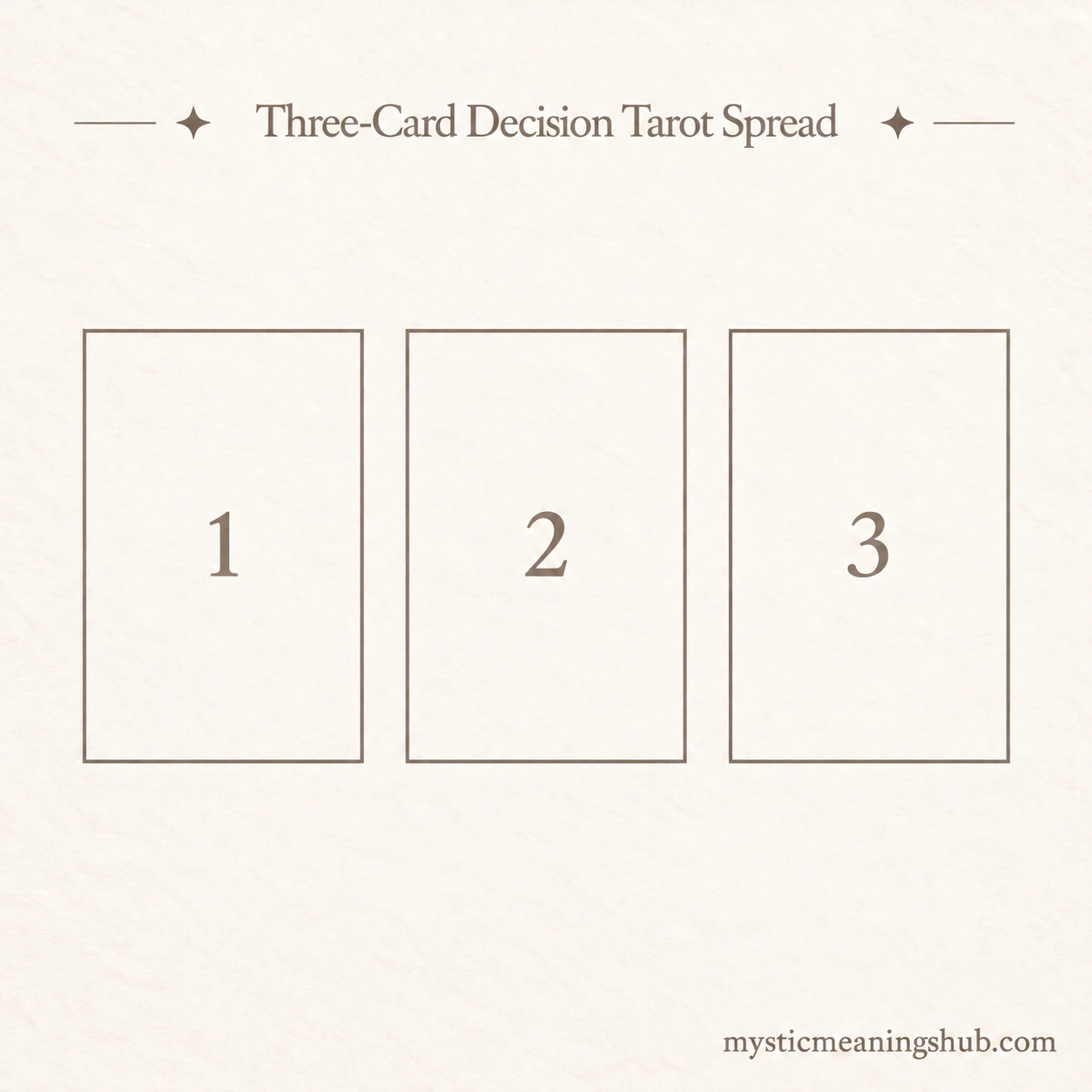
When you’re choosing between two options, it can help to look at each one separately. A three-card decision spread gives you a card for each option, followed by something to consider before choosing.
You can use it to compare two plans, think about making a change, or work out what matters most to you in a decision.
When to Use This Spread
Try this spread when:
- You have two clear options.
- Each choice has something that appeals to you.
- You’re deciding whether to continue with a plan or try a different approach.
- You want to understand what’s making a choice difficult.
How to Use the Spread
Before shuffling, decide what each option means. Write them down if it helps:
- Option A: the first option you’re considering.
- Option B: the alternative you’re considering.
Ask a question such as “What do I need to consider when choosing between these two options?”
Shuffle your deck, then draw three cards and place them in a row from left to right:
- Option A
- Option B
- What to consider
You could also ask:
- What might each option involve?
- What matters most in this decision?
- What could help me compare these two choices?
What Each Position Means
1. Option A
The first card relates to the first option you’ve named. It may highlight what that choice offers, what it asks of you, or an aspect you haven’t thought much about.
Connect the card’s meaning with the actual choice. A card associated with cooperation, for example, could draw your attention to the people you’d be working with or the support available.
2. Option B
The second card relates to your other option. Ask the same question of both option cards.
Look at the differences between them. One might involve more independence, while the other offers more structure. Consider which qualities matter to you and what each would mean in practice.
3. What to Consider
The final card highlights a factor that could help you make the decision. It might relate to your priorities, your motivation, the time you have, or a responsibility that affects both options.
Read it alongside the first two cards. How does it change what you notice about each choice?
Example Reading
Question: What do I need to consider when choosing between joining an art class and learning on my own?
- Option A: join a weekly art class.
- Option B: learn independently at home.
Card 1: Three of Pentacles — Option A
The Three of Pentacles suggests learning through guidance, feedback, and working alongside others. For the class, this could highlight the value of a teacher who can answer questions and help you improve your technique.
Card 2: The Hermit — Option B
The Hermit suggests independent study and concentration. Learning at home could give you time to follow your own interests, experiment, and work at your own pace.
Card 3: Eight of Pentacles — What to Consider
The Eight of Pentacles points to practice and developing a skill through repeated effort. A useful question is which option would help you practise regularly and keep learning when something gets difficult.
Reading the Cards Together
Both options offer a way to learn, with different kinds of support. The class provides feedback and a regular meeting time. Studying at home gives you more control over what you learn and when.
The third card helps you compare those arrangements with your own habits. If you tend to put practice off, a weekly class might help you get started. If you already enjoy setting aside time to work on your own, independent learning could suit you.
You could then check the class schedule or find out what resources you’d need at home before deciding.
After Your Reading
Write down what stood out about each option and any questions the reading raised. You may discover that you need more information about one choice, or that a particular priority matters more than you’d realised. Use those observations when you compare your options and decide what works for you.
Related Spreads
Want to see how cards work together in a reading?
Explore the Tarot Combinations Guide