Two of Pentacles Tarot Meaning
Introduction
The Two of Pentacles is a Minor Arcana card linked with balance, flexibility, and managing changing priorities. It belongs to the suit of Pentacles, which is connected to the element of Earth. Earth represents work, money, daily responsibilities, and the practical side of life. In the first card of the suit, an opportunity or resource appears. With the number two, the focus shifts toward handling that opportunity while balancing different demands.
In tarot, the number two often represents balance, choice, and interaction between different forces. It can show situations where attention must move between two responsibilities or priorities. In the suit of Pentacles, this balance often appears through managing money, work, or daily tasks.
The Two of Pentacles commonly reflects situations where multiple responsibilities must be handled at the same time. It is often linked with adapting to change, managing finances carefully, or balancing work, commitments, and personal life.
The Two of Pentacles Key meaning
The Two of Pentacles represents balance, flexibility, and time management. It often appears when practical matters require careful handling.
The number two reflects duality. In this card, it suggests handling two priorities at once. The Pentacles suit adds a focus on material or physical matters. Together, they show the need to manage resources and responsibilities with care.
Key themes linked to the Two of Pentacles include:
• Balancing tasks or duties
• Managing money or resources
• Adapting to change
• Making practical choices
The card does not usually show crisis. Instead, it reflects active management of daily life.
Examples include:
• A person working full-time while studying in the evening
• Adjusting a budget to pay both rent and loan payments
• Handling two work projects with different deadlines
The Two of Pentacles shows movement and the effort needed to stay organized.
Upright meaning
When upright, the Two of Pentacles points to active balance. It shows a person managing more than one duty or priority. The situation may feel busy, but it remains under control.
The card often appears when schedules are full. It may also show the need to shift focus between tasks. Adaptability is important.
The upright card can also represent a practical choice between two options. This choice may involve time, money, or work.
Examples of upright situations include:
• Managing work tasks while caring for family responsibilities
• Adjusting monthly expenses to keep finances stable
• Choosing between two job offers based on practical factors
The upright Two of Pentacles reflects flexibility and steady effort.
Reversed meaning
When reversed, the Two of Pentacles may show imbalance. Responsibilities may feel overwhelming or hard to manage.
The reversed card can suggest poor planning or financial strain. Too many tasks may lead to stress. In some cases, it highlights the need to reduce commitments.
Examples of reversed situations include:
• Missing deadlines due to taking on too much work
• Struggling to keep up with bills and expenses
• Feeling torn between two choices without clear direction
The reversed card often suggests the need to simplify and refocus.
Love meaning
In love readings, the Two of Pentacles often relates to balancing a relationship with other life duties. It may show the effort needed to maintain harmony.
The card can reflect busy schedules that affect time together. It may also show the need to balance independence and partnership.
Examples in love contexts include:
• A couple managing different work shifts while staying connected
• Balancing personal goals with shared relationship plans
• Deciding how to divide responsibilities at home
The card highlights practical balance within relationships rather than emotional intensity.
Career and finances
The Two of Pentacles is often linked to career and financial management. It may appear when a person is juggling tasks, income sources, or expenses.
In career readings, it can show handling multiple roles or projects. It may also reflect adapting to new work demands.
In financial readings, the card often points to budgeting or managing income carefully.
Examples include:
• Working two jobs to maintain financial stability
• Managing freelance work alongside a regular position
• Balancing short-term bills with long-term savings goals
The card reflects ongoing effort to keep finances and work responsibilities steady.
Advice
As advice, the Two of Pentacles suggests staying organized and flexible. It highlights the value of planning and steady adjustment.
The card often points to reviewing priorities. It may be helpful to focus on what is most important and reduce unnecessary strain.
Examples of advice linked to this card include:
• Creating a clear schedule to manage tasks
• Reviewing financial plans to ensure balance
• Taking time to assess which commitments deserve attention
The emphasis is on practical awareness and steady management.
Yes or No meaning
In yes or no questions, the Two of Pentacles often suggests a neutral or uncertain answer. The result may depend on balance and organization.
The card reflects an ongoing process rather than a final outcome.
Examples include:
• A project that may succeed if time is managed well
• A decision that requires careful comparison of two options
• A financial step that depends on proper budgeting
The card suggests that effort and balance will shape the final result.
Symbolism
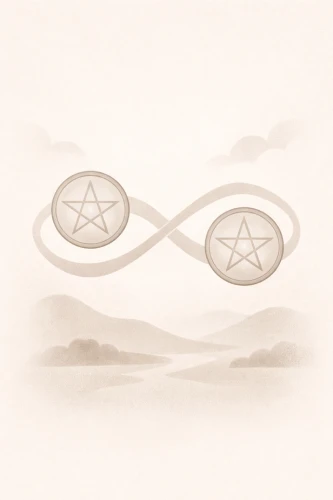
In the Rider–Waite–Smith tarot deck, the Two of Pentacles shows a figure juggling two coins. The coins are connected by a looping ribbon shaped like the infinity symbol.
The juggling figure represents flexibility and movement. It shows the act of keeping responsibilities in motion.
The infinity loop suggests ongoing cycles. Balance is not fixed. It requires continuous adjustment.
In the background, waves rise and fall. Ships move across the sea. These elements represent change and the ups and downs of daily life.
Key symbols include:
• Two pentacles representing practical duties or resources
• The infinity symbol representing constant balance
• The waves and ships showing change and movement
Together, these images reflect the steady effort needed to manage life’s demands.
The Two of Pentacles in a reading
When the Two of Pentacles appears in a reading, it often highlights a busy period. Practical matters may require careful attention.
The card may also point to decisions about money, time, or work. Its position in a spread can shape its meaning.
In a past position, it may reflect a period of heavy responsibility. In a present position, it can show active management of tasks. In a future position, it may suggest upcoming changes that require flexibility.
Examples include:
• In a career reading, managing several work projects
• In a financial spread, balancing income and expenses
• In a life reading, handling family and personal duties at once
The card reflects movement and ongoing adjustment.
Frequently asked questions
What does the Two of Pentacles mean in tarot?
The Two of Pentacles represents balance and flexibility in practical matters. It often appears when several responsibilities must be managed at the same time.
Is the Two of Pentacles a positive card?
The card is neutral. It reflects activity and adjustment rather than clear success or failure.
Does the Two of Pentacles relate to money?
Yes. It often appears in financial readings, especially when budgeting or managing expenses.
What does the Two of Pentacles reversed mean?
Reversed, the card may show imbalance, stress, or difficulty handling responsibilities. It can suggest the need to simplify or reorganize.
Conclusion
The Two of Pentacles reflects balance in action. As the second card in the Pentacles suit, it combines the theme of duality with practical concerns.
The card often appears during busy periods that require steady management of tasks, finances, or responsibilities. It highlights flexibility and careful adjustment.
In tarot readings, the Two of Pentacles represents ongoing effort rather than final results. Its meaning centers on balance, organization, and the practical handling of life’s changing demands.